Marble

Marble protection that actually stops etching

Marble is calcium carbonate, and calcium carbonate dissolves in acid. That single fact explains nearly every mark you will ever see on a marble benchtop. Our clear film puts a barrier between the stone and everything that would otherwise touch it.

  • 10-year written warranty
  • Most projects in one day
  • Gloss or Matte/Satin
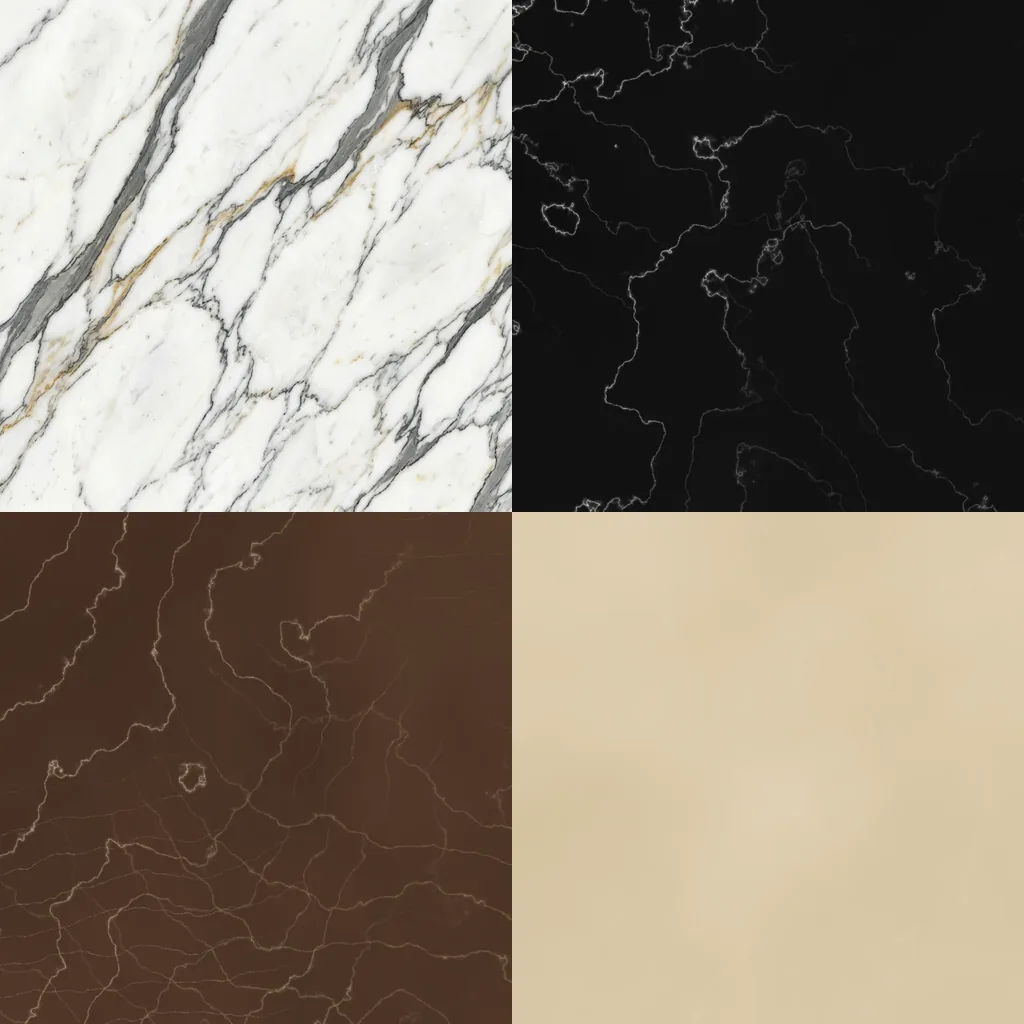
Four marbles side by side: white Calacatta, black Nero Marquina, brown Emperador and beige Crema Marfil

Marble + Stone Protection Film

  • No etching
  • No stains
  • Everyday scratches resisted
Stone type
Metamorphic, calcite
Origin
Italy, Spain, Greece, Turkey and more
Hardness (Mohs)
3 to 4
Etch risk
Very high
Stain risk
Moderate
Scratch risk
High

Risk shown for unprotected stone. With our film, all three are covered.

Before you try anything: always speak to a professional before cleaning, treating or applying any product to your stone. Every slab is different, and the wrong product can cause permanent damage. Contact us or a qualified stone restorer first.

Quick answer

The most reliable way to protect marble is a clear protection film over the surface. Sealers only slow liquids soaking in; they do nothing to stop acids such as lemon juice, wine or vinegar from etching the stone. A film is a physical layer, so acids, oils and pigments never reach the marble at all.

Key points

  • Every true marble etches, from budget Carrara to rare Calacatta.
  • Etching happens in seconds to minutes and is damage, not dirt.
  • Film protects polished and honed marble, in Gloss or Matte/Satin.
  • Already-marked marble can be restored first, then filmed.

Why marble marks so easily

Marble forms when limestone is put under heat and pressure deep underground. The result is a dense, crystalline stone made almost entirely of calcite. Calcite is soft (around 3 on the Mohs scale, the same as a copper coin) and it reacts with acid. When a drop of lemon juice lands on it, the acid dissolves a thin layer of the surface. On polished marble that shows up as a dull patch; on honed marble it can look like a slightly darker or smoother spot.

That is why marble owners describe the same pattern over and over: a perfect benchtop at handover, then a ring from a wine glass, a trail of juice beside the chopping board, and a hazy area next to the sink where a spray cleaner was used every day. None of these are stains, and no amount of cleaning removes them.

Every type of marble we protect

We film all true marbles. The ones we are asked about most have their own pages: Calacatta, Carrara, Statuario, Arabescato, Nero Marquina, Emperador and Crema Marfil.

We also regularly protect Thassos, Volakas, Bianco Lasa, Panda White, Bardiglio, Palissandro, Calacatta Viola, Calacatta Oro and Pietra Grey, along with stones sold as marble that are closer to dolomite. If you do not know the name of your marble, we will identify it when we visit and tell you whether it will etch and which finish will suit it.

Why a sealer is not marble protection

Most marble is sealed when it is installed, and many owners assume that means it is protected. A penetrating sealer sits inside the pores and slows down how fast a liquid soaks in, which buys time against staining. It does not change the chemistry of the stone, so acids still etch a sealed benchtop exactly as fast as an unsealed one. We explain the difference in detail in sealer vs protection film.

Already marked?

Repairing damaged marble

Protection works best on a surface that already looks the way you want. If yours is stained or etched, here is what each kind of damage is and how it is usually fixed. Then we protect it so it stays that way.

01

Dull rings and drips (etching)

Acid has dissolved the polish. Light etches on polished marble can be re-polished by a stone restorer; deeper ones need honing first. See how to fix etched marble.

02

Dark patches (stains)

Oil, coffee or wine has soaked in. Most can be drawn out with a poultice left to dry over 24 to 48 hours. See our stain removal guide.

03

Fine scratches

Marble is soft, so ceramic plates and grit leave marks. A restorer can hone and re-polish them out.

04

Then protect it

Once the surface is back to how you want it, our film keeps it that way. We can recommend the order of works when we quote.

Choosing a finish

Gloss or Matte/Satin on Marble?

Match the finish you have: Gloss over polished marble keeps the depth and mirror reflection, Matte/Satin over honed marble keeps the soft, chalky look. Or change it deliberately. The protection is identical either way.

Marble questions

Frequently asked

A clear protection film over the surface. It is the only option that physically stops acids from touching the stone, so it prevents etching as well as staining. Sealers only slow staining.
Yes, anywhere the film covers. Acids sit on top of the film and are wiped away, so the marble underneath never reacts.
Yes. Our Matte/Satin film keeps the soft, low-sheen look of honed marble. If you would rather make honed marble glossy, Gloss film does that too.
No. The film is optically clear with no orange-peel texture, and we match the sheen to your surface, so most people cannot tell it is there.

Protect your marble for the next decade.

Request a free quote online or by email. We will call to arrange an on-site visit or a quote over the phone.